Essay / / 7 min read
Raising Generation AI
My two-year-old loves Gemini and prefers it over ChatGPT and Claude — notes on raising a child whose normal already includes AI bedtime stories.
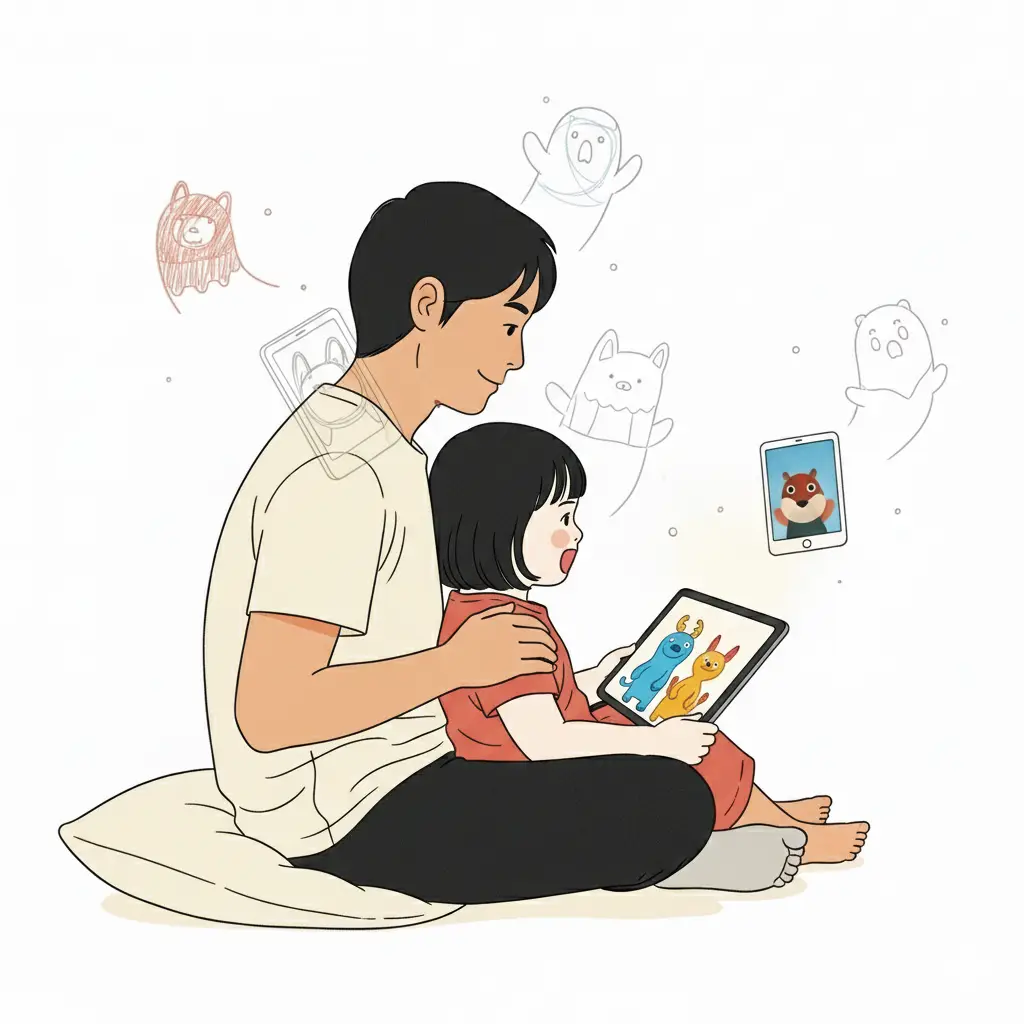
My 2 year old daughter loves Gemini, and prefers it over ChatGPT and Claude.
Obviously, it’s not a conscious decision—my daughter has just started toilet training, I don’t think she understands yet the differences in accuracy and precision and speed of LLMs. But she does love stories at night, and lately, Gemini has become part of our nighttime routine.
Storybook is a gem in Gemini—based on a few prompts, you can create custom stories and images, with consistent characters and narration. It’s perfect for imaginative 2-year-olds who want to combine Buddha, Belugas, and the Singapore super trees all in one tale. It has been a big hit—the tool’s ability to react quickly to any imaginative whim (tiger riding beluga) and adapt stories (add daddy), complete with narration (Once there was a Princess in Sydney…), made it pretty much my daughter’s favorite technology pretty quickly.
I still write out the prompts for her - she can barely speak in sentences with more than 5 words. But watching her come up with different scenarios, me putting those into AI, and then having her then consume the exact scenes and stories she said, is amazing. It feels the same way as when I was building Lego when I was young. There’s a satisfying emotion to see your imagination become real instantly thru creation.
This casual magic is her new normal.
This is the future my daughter is growing up into. Her generation - the AI generation - is growing up with a fundamentally different relationship with creation and content than any generation before.
AI is making everyone Spielberg
Content and entertainment have always been the privilege of the few.
It’s only in the last decades that it has become more massively accessible for people to do, and only in this decade has video content been something anyone can do, albeit with varying (low) quality.
AI changes this significantly. While in the past, Wallace and Gromit creators needed to spend hours and hours in stop-motion animation just to create a really nice 1-minute video, two months ago I created a similar stop-time animation on a banal corporate presentation in less than 15 minutes.
Pablo Picasso famously spent his entire lifetime dramatically changing his style from realism to cubism and to other later forms. Last year, I created a presentation where the theme was obviously Picasso-inspired for anyone who would have noticed - the illustrations, colors, and style were all artistic, even if the content was a dull case study.
AI is democratizing production, much like the internet has democratized distribution.
[Video on YouTube](https://www.youtube.com/watch?v=HK6y8DAPN\_0)
While the papyrus, the printing press, and eventually the internet and YouTube have made it so easy to put ideas into form, and get that form mass distributed, AI is now allowing people to put that same idea into form normally reserved for the most discerning artists or the most well-budgeted films. Tools like Google’s Flow or OpenAI’s Sora allow anyone, anywhere, to create Ghibli-style productions or images easily, or do Tarantino-style close-ups with a fully AI-generated beautiful actress that will do anything you want for the scene.
The result - I make my daughter’s Ghibli-based storybooks for our story time routine. Someone, somewhere, can make a Wong Kar Wai-style video for their quinceañera.
The speed of this shift is staggering. Last year, we were impressed by 4-second AI video clips that mostly made sense. We laughed at AI trying (and failing) to create a video of Will Smith eating spaghetti.
Now Google’s Veo generates 8-second videos at 1080p with coherent physics. Veo 3 provides better movement and longer clips. Runway’s pushing toward full minutes with Act-One. Meta’s Movie Gen syncs audio to generated video. By the time my daughter is in kindergarten, we’ll probably be generating full episodes of whatever she dreams up. And we’ll have Will Smith eating an entire feast in full 3D.
Soon enough, the future will enable us to create feature-length content. Not just short clips, but actual movies, tailored perfectly to individual preferences.
What would that future look like?
In entertainment, we’ve seen this before. When it became easy to post stories and content via the internet, blogs exploded in popularity, content creation skyrocketed, but only a few really got to the level of self-sustaining businesses. Most are just hobbies or outlets that are picked up and pushed on _(like this one)_.
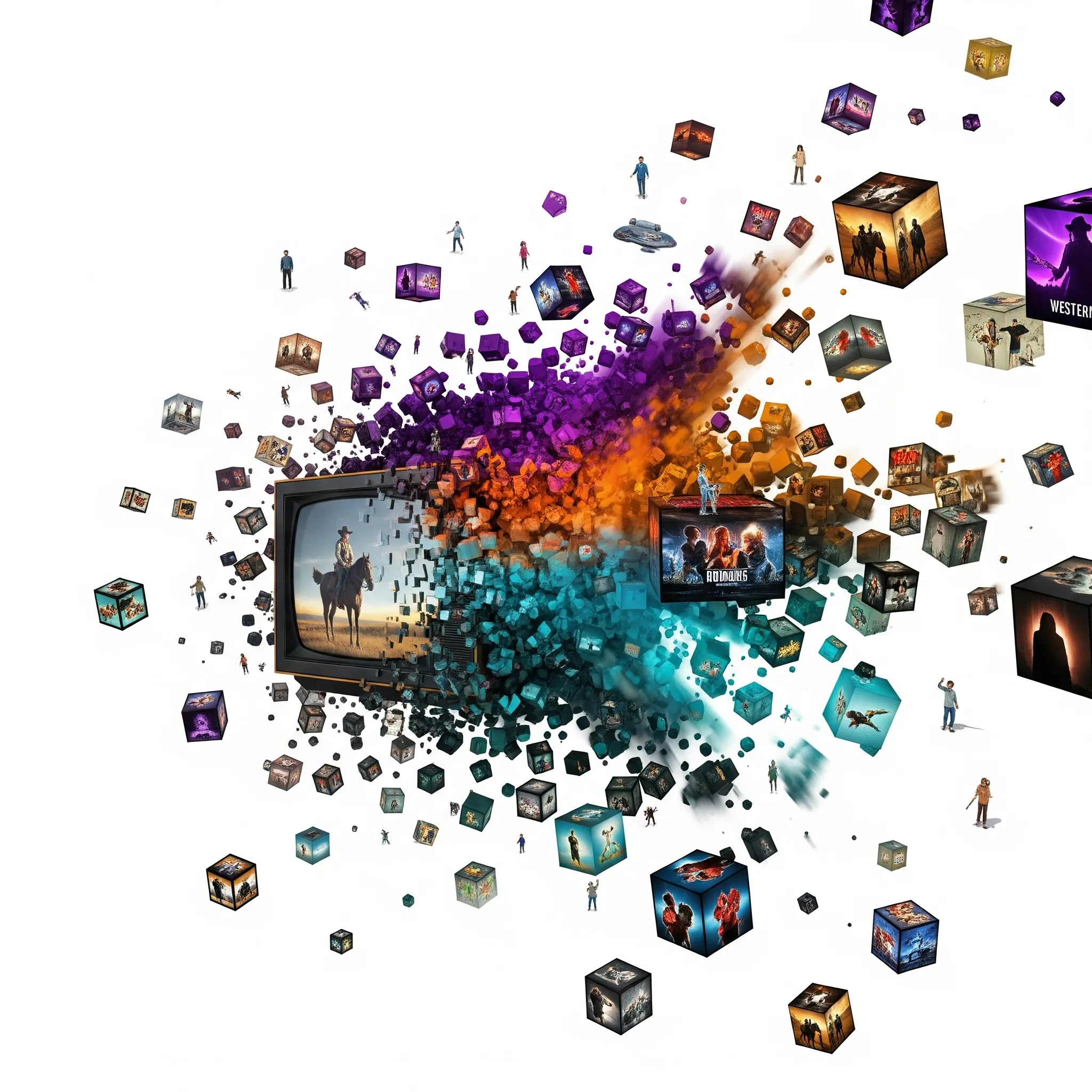
When YouTube started rising and even TikTok and Reels, the story was the same - massive amounts of creators and would-be creators flocked to the platform, but only the few who figured out the slog and consistently produced content and improved their content were able to rise above. That didn’t stop the millions to still create one or two videos, creating a morass of videos with less than 50 views all over the internet.
Similar to these trends, I believe that’s how our AI future would unfold.
Specifically, I see it diverging into three initial paths:
-
Broad-based appealing content the vast majority of the public enjoy _(Mr Beast, MKBHD)_
-
Hyper specialized content that niche fans would enjoy _(Internetsnathan for Kpop, Caspian Report for politics, Wear Testers for Shoes)_
-
Infinite depth of bad to ok content that people upload, share around and then forget
What really changes is that the content itself becomes so trivial to produce. Your perfectly-tailored true crime documentaries, or Saturday night cartoons, become a commodity - even more abundant, cheap, and instantly available. More, it’s instantly produceable, customisable, and then re-shareable. Didn’t like the ending of Survivor? Spend a few minutes, and you can change that episode to make Rob win, over, and over, and over.
This is what we haven’t seen before, not en masse. Not at the scale we’re going to see soon.
When everyone can create their custom story book, instantly, what space would there be for would-be story book creators in the future?
This is the fourth category of self-generated content, where entertainment is created, tailored, and generated by humans to serve their own unique tastes. It’s shared privately among the few, but its impact would be massive - it will reduce a significant amount of eyeballs that now go to Netflix, just like how YouTube ate up TV time in the advent of the internet.
People will spend more time watching their own creations and their friends or communities’ creations rather than some stranger over the seas. And it will have a significant impact to entertainment, and consequently, marketing.
Fascinating subject, but it’s worth discussing in a different post.
Taste is what matters
Here’s what changes: in a world where execution becomes trivial, imagination becomes everything. The premium won’t be in the CGI quality or the production values. It’ll be in the creative vision, the unexpected story, the cultural moment that everyone needs to experience together.
Look at Mr Beast’s success—not because he has better cameras than everyone else, but because he understands attention at a cellular level. MKBHD doesn’t just review phones; he has a taste that millions trust. In a world where everyone can produce Hollywood-quality content, the differentiator becomes the invisible stuff—taste, timing, cultural intuition. The human ability to know what people want before they know they want it.
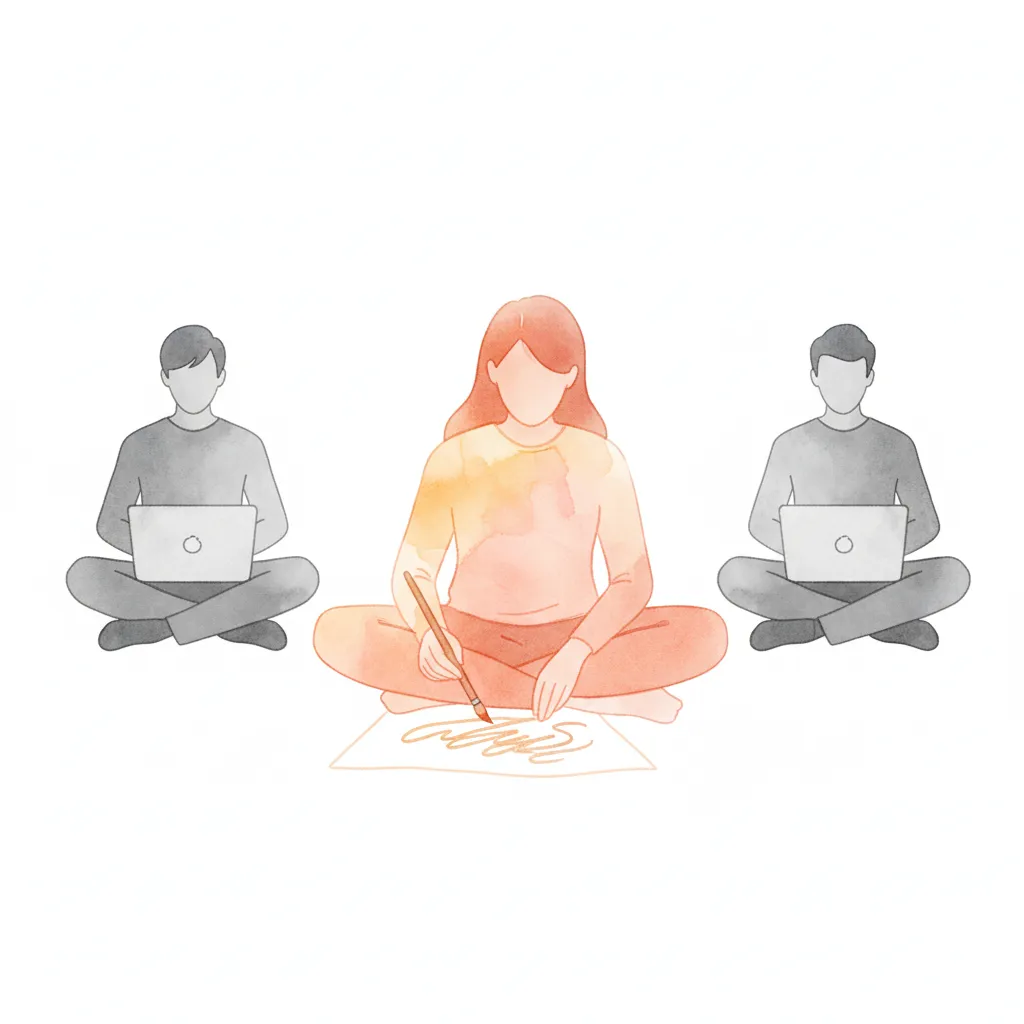
I see this already at work. While everyone have the same access to the same tools and the same training to use them, the product is never similar. There’s an element of experience that is evident, and an element of taste that is refined through life and then gets expressed as imagination manifested through art.
We’ll still flock to exceptional content, but “exceptional” gets redefined. It’s less about technical mastery (the AI handles that) and more about creative audacity. The premium shifts from “how” to “what” and “why.”
Looking towards the Future
I watch my daughter dream up these AI stories and I’m caught between wonder and uncertainty. She’s learning that anything she imagines can instantly appear on screen - what does that do to a developing mind? Would AI creation make her more impatient? How would cooking, or pottery, even compare when AI can instantly create something near-perfect regardless of how sloppy your prompt is?
The tools are evolving faster than our understanding of how to teach kids to use them wisely.
We’re essentially running a massive experiment with no control group.
How do you prepare kids for this world? The creative paradigms, the educational frameworks, the basic ideas about what constitutes “media literacy”—none of it has caught up to where we already are, let alone where we’re heading. My daughter will enter a workforce where “prompt engineer” might be as outdated as “switchboard operator.” The rate of change makes every parenting decision feel like a guess.
Maybe that’s always been parenting, though. Every generation raises kids for a world that doesn’t quite exist yet. The difference now is the acceleration—the world she’ll enter at 18 will be as foreign to today as smartphones would be to someone from 1990.
For now, I’m just trying to make sure she knows the difference between what she imagines and what’s real. Even if that distinction keeps getting blurrier every night at bedtime, when Buddha and the beluga swim through Singapore’s Super trees, and daddy joins the adventure with a simple voice command.
The future of content isn’t just about what we can create. It’s about what happens to us when creation becomes as easy as imagination. My daughter’s generation will be the first to find out.
Joshua Pielago — Sydney